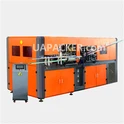
Hey there! As a supplier of Automatic Blow Molding Machines, I often get asked about the vibration level of these machines during operation. It's a crucial topic, especially for those in the manufacturing industry who rely on these machines to produce high - quality plastic products. So, let's dive right in and talk about what the vibration level of an Automatic Blow Molding Machine is like.
First off, what causes vibrations in an Automatic Blow Molding Machine? Well, there are several factors. One of the main culprits is the mechanical movement within the machine. The machine has various moving parts, such as the clamping unit, the blowing unit, and the conveyor system. When these parts are in motion, they generate forces that can lead to vibrations. For example, the rapid opening and closing of the mold in the clamping unit can create a significant amount of vibration.
Another factor is the high - pressure air used in the blowing process. The sudden release and application of high - pressure air can cause the machine to shake. And let's not forget about the imbalance of rotating parts. If the rotating components of the machine are not properly balanced, it can result in uneven forces, which in turn lead to vibrations.
Now, why does the vibration level matter? You might think a little shake here and there isn't a big deal, but that's not the case. Excessive vibrations can have a negative impact on the machine's performance and the quality of the products it produces. For one thing, it can cause wear and tear on the machine's components. The constant shaking can loosen bolts and nuts, damage bearings, and even lead to cracks in the machine's frame over time. This not only shortens the machine's lifespan but also increases maintenance costs.
In terms of product quality, vibrations can affect the consistency of the products. If the machine is vibrating too much, it can cause uneven wall thickness in the plastic bottles or containers being produced. This can lead to products that don't meet the required standards, which is a big no - no in the manufacturing industry.
So, what's an acceptable vibration level for an Automatic Blow Molding Machine? There isn't a one - size - fits - all answer to this question, as it depends on the type and size of the machine, as well as the specific application. However, most manufacturers aim for a vibration level that is within a certain range to ensure smooth operation and high - quality production.
As a supplier, we at [our company] take vibration control very seriously. We've invested a lot of time and resources in developing technologies to reduce the vibration level of our machines. For instance, we use advanced balancing techniques for rotating parts. By precisely balancing the components, we can minimize the uneven forces that cause vibrations.
We also design our machines with vibration - damping materials. These materials absorb the energy generated by the vibrations, reducing their impact on the machine and its surroundings. And our engineers are constantly working on improving the machine's structural design to make it more stable and less prone to vibrations.
Now, let me tell you about some of our popular Automatic Blow Molding Machines. We have the High Speed Bottle Blowing Machine. This machine is known for its high - speed operation and low vibration level. It's designed to produce a large number of bottles in a short period of time without sacrificing quality.
Another great option is the 330mL - 1.5L Automatic Blow Molding Machine. This machine is perfect for producing a wide range of bottle sizes within the specified volume. It has been engineered to have a stable operation with minimal vibrations, ensuring consistent product quality.


And if you're looking for a machine to produce 500mL - 2L PET bottles, our 500mL - 2L PET Blowing Machine is a top choice. It combines advanced technology with low - vibration design to deliver excellent results.
When it comes to measuring the vibration level of our machines, we use state - of - the - art vibration sensors. These sensors are installed at key points on the machine to accurately monitor the vibration amplitude and frequency. The data collected by these sensors is then analyzed to ensure that the machine is operating within the acceptable range.
We also conduct regular testing and quality control checks during the manufacturing process. This helps us identify any potential vibration issues early on and make the necessary adjustments. And we provide our customers with detailed information about the vibration level of our machines, so they know exactly what to expect.
In conclusion, the vibration level of an Automatic Blow Molding Machine is an important aspect that shouldn't be overlooked. It can have a significant impact on the machine's performance, lifespan, and the quality of the products it produces. As a supplier, we're committed to providing our customers with machines that have low vibration levels and high - performance capabilities.
If you're in the market for an Automatic Blow Molding Machine and want to learn more about our products and how we control the vibration level, don't hesitate to get in touch. We're here to answer all your questions and help you find the perfect machine for your needs. Whether you're a small - scale manufacturer or a large - scale production facility, we have the right solution for you. So, reach out to us today and let's start a conversation about your manufacturing requirements.
References
- "Handbook of Plastic Materials and Technology" by Irvin I. Rubin
- "Mechanical Vibrations" by Singiresu S. Rao