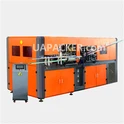
As a seasoned provider of blow moulding machinery, I've had the privilege of witnessing firsthand the transformative impact of sensors on this industry. Sensors have become integral to the operation, efficiency, and quality control of blow moulding machines, revolutionizing the way we produce plastic containers. In this blog post, I'll delve into the various roles that sensors play in blow moulding machinery, highlighting their importance and the benefits they bring to the manufacturing process.


Monitoring and Control of Temperature
Temperature is a critical factor in blow moulding. The preform, which is typically made of PET (polyethylene terephthalate), needs to be heated to a specific temperature range to become pliable enough for blowing into the desired shape. Sensors are used to monitor and control the temperature at various stages of the process.
In the heating section of the blow moulding machine, infrared sensors are commonly employed to measure the surface temperature of the preforms. These sensors provide real - time feedback to the machine's control system, allowing it to adjust the heating elements accordingly. By maintaining a precise temperature, the sensors ensure that the preforms are heated uniformly, which is essential for producing high - quality bottles with consistent wall thickness. For instance, if the temperature is too low, the preform may not stretch properly, resulting in a bottle with weak spots or uneven shape. On the other hand, if the temperature is too high, the plastic may become too soft and cause the bottle to collapse or develop thin walls.
Pressure Sensing
Pressure is another key parameter in blow moulding. During the blowing process, high - pressure air is used to expand the heated preform into the shape of the mould. Pressure sensors are used to monitor the air pressure inside the preform and the mould cavity.
The initial blowing pressure is carefully regulated to ensure that the preform starts to expand smoothly without rupturing. As the preform fills the mould, the pressure continues to build up. A pressure sensor can detect when the correct pressure is reached, signaling the machine to stop the air supply. This not only helps in achieving the right bottle shape and wall thickness but also prevents over - pressurization, which could damage the mould or the bottle.
In addition, pressure sensors are also used to monitor the pressure in the hydraulic systems of the blow moulding machine. Hydraulic systems are responsible for moving the mould halves, clamping them together, and operating other mechanical components. By monitoring the hydraulic pressure, the sensors can detect any abnormal pressure fluctuations, which may indicate a problem such as a leak or a malfunctioning valve. Early detection of these issues can prevent costly breakdowns and downtime.
Position and Motion Sensing
Accurate positioning and motion control are crucial for the proper functioning of blow moulding machines. Sensors are used to detect the position of various machine components, such as the mould halves, the preform carrier, and the blow pins.
Proximity sensors are commonly used to detect the presence or absence of objects. For example, a proximity sensor can be used to detect when a preform has been loaded into the preform carrier. This information is then sent to the control system, which can initiate the next step in the process, such as moving the preform to the heating section.
Encoder sensors are used to measure the rotation and linear movement of machine components. In the case of the preform carrier, an encoder sensor can accurately measure its movement along the conveyor belt, ensuring that the preforms are precisely positioned at each stage of the process. This is important for maintaining the correct alignment between the preform and the blow pin during the blowing process.
In the mould clamping system, position sensors are used to ensure that the mould halves are properly aligned and clamped together with the correct force. If the mould is not clamped correctly, it can result in flash (excess plastic) on the bottle or even cause the bottle to be misshapen.
Quality Control
Sensors play a vital role in quality control during the blow moulding process. Optical sensors can be used to inspect the bottles for defects such as cracks, scratches, or uneven wall thickness. These sensors use light to scan the surface of the bottles as they come out of the mould. Any deviations from the expected quality standards are detected by the sensors, and the defective bottles can be automatically rejected from the production line.
Weight sensors can also be used to ensure that each bottle has the correct weight. Since the wall thickness of the bottle is directly related to its weight, a weight sensor can detect if a bottle is under - or over - filled with plastic. This helps in maintaining the consistency of the product and reducing waste.
Efficiency and Productivity
By providing real - time data and feedback, sensors contribute to the overall efficiency and productivity of blow moulding machines. The ability to monitor and control key parameters such as temperature, pressure, and position ensures that the machine operates at its optimal performance level. This reduces the number of defective products, minimizes downtime due to breakdowns, and increases the production speed.
For example, with accurate temperature and pressure control, the machine can produce bottles more quickly without sacrificing quality. The sensors also enable predictive maintenance, as they can detect early signs of component wear or malfunction. By addressing these issues before they cause a major breakdown, the machine can continue to operate smoothly, resulting in higher productivity.
Conclusion
In conclusion, sensors are an indispensable part of modern blow moulding machinery. They enable precise control of the manufacturing process, ensure high - quality product output, and contribute to the overall efficiency and productivity of the production line. As a blow moulding machinery supplier, we understand the importance of incorporating the latest sensor technology into our machines to meet the evolving needs of our customers.
If you are in the market for high - performance blow moulding machines, we invite you to explore our range of products, including the High Speed Bottle Blowing Machine, the 330mL - 1.5L Automatic Blow Molding Machine, and the 500mL - 2L PET Blowing Machine. Our machines are equipped with state - of - the - art sensors to ensure reliable and efficient operation. If you have any questions or would like to discuss your specific requirements, please do not hesitate to contact us for a procurement negotiation.
References
- "Blow Molding Handbook" by George Gogos
- "Sensors in Industrial Automation" by Jörg Franke
- Industry research reports on blow moulding technology and sensor applications.